Hearing affects how we learn, work, and connect with the people around us. Behind every hearing test, newborn screening, and hearing aid fitting is a trained professional: the audiologist. If you’re curious about building a career in this field, here’s what the path looks like in the Philippines today — from schooling to where audiologists actually work.
What does an audiologist do?
An audiologist is a hearing and balance specialist. Audiologists test hearing in patients of all ages — from newborns to older adults — interpret the results, and help manage hearing loss through hearing aids, rehabilitation, counseling, and referrals.
A common question is how audiologists differ from ENT doctors. A helpful comparison is the eye-care world: an audiologist is to an ENT (ear, nose and throat) specialist roughly what an optometrist is to an ophthalmologist. The ENT is a physician who can diagnose medical conditions and perform surgery; the audiologist specializes in measuring hearing and in non-medical management such as hearing aid selection and fitting. The two work closely together, and many audiology services happen through ENT referrals.
Typical audiology work includes:
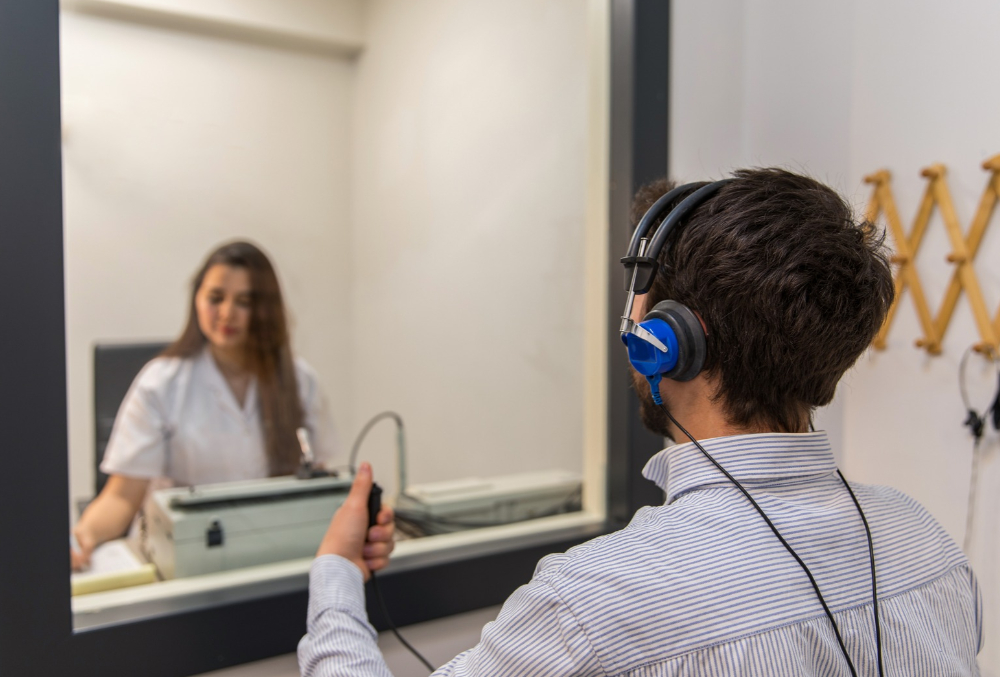
- Hearing evaluations — pure-tone and speech audiometry, tympanometry, and other diagnostic tests
- Newborn and pediatric testing — including screening (OAE) and confirmatory or diagnostic tests (ABR/ASSR)
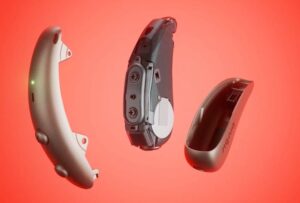
- Hearing aid evaluation, fitting, and follow-up
- Aural rehabilitation — helping children and adults make the most of their hearing technology
- Hearing conservation — protecting people from noise-induced hearing loss at work and in daily life
- Counseling — guiding patients and families through results and next steps
Step 1: Earn a bachelor’s degree
In the Philippines, audiology is studied at the graduate level, so your first step is a bachelor’s degree. The local master’s programs admit applicants who hold a Bachelor of Science degree. A background in the health or allied health sciences — such as speech-language pathology, nursing, psychology, biology, or medical technology — can give you a head start, but always check each program’s current admission requirements.
Step 2: Complete a Master in Clinical Audiology
The professional degree for audiologists in the country is the Master in Clinical Audiology. Two well-established programs offer it:
University of Santo Tomas (UST) — The UST Faculty of Medicine and Surgery launched the country’s first professional master’s degree in clinical audiology in 1999, developed in collaboration with Macquarie University in Australia. The program celebrated its 25th year in 2024 and has trained audiologists now working in hospitals, private clinics, and rural communities in the Philippines and abroad.
University of the Philippines Manila (UP Manila) — The Master in Clinical Audiology (MClinAud) is a two-year graduate program offered jointly through the College of Medicine and the College of Allied Medical Professions. It covers audiologic evaluation, habilitation, hearing conservation, and the development of audiology services in the Philippines. Students complete at least 300 hours of supervised clinical practicum, applicants go through an admissions interview, and students have up to five years to finish.
Coursework typically spans the theory of hearing science, assessment strategies, hearing amplification, aural rehabilitation for children and adults, hearing conservation, research, and supervised clinical practice.
Tip: Intake schedules can vary — some programs have not admitted a new class every year. Contact the program office early so you don’t miss an application window.
Is there a licensure exam for audiologists?
Not yet. Unlike nurses, physical therapists, or speech-language pathologists, audiologists in the Philippines do not currently have a Professional Regulation Commission (PRC) board or a national licensure exam.
Several bills have been filed in Congress over the years — including in the 18th and 19th Congresses — proposing a Professional Regulatory Board of Audiology, a board exam, and a national registry of audiologists. As of this writing, none has been enacted into law. For comparison, speech-language pathology became a regulated profession in 2019 under Republic Act No. 11249.
What this means for you: For now, your credibility as an audiologist rests on your graduate degree, your supervised clinical training, and your continuing professional development. It’s also worth watching for new legislation — if audiology becomes a regulated profession, there may be transition rules for practitioners already in the field.
Professional organizations to know
Joining the professional community helps you stay current, find mentors, and access continuing education. Organizations active in Philippine audiology include:
- Association of Clinical Audiologists of the Philippines (ACAP) — the professional association for graduates of the local clinical audiology programs
- Philippine Society of Audiology — named in proposed legislation as a partner in setting professional standards
Where audiologists work
Audiology graduates in the Philippines find work in a range of settings:
- Hospitals and ENT departments — diagnostic testing, pre- and post-surgical hearing assessment, and cochlear implant programs
- Private hearing clinics — hearing tests, hearing aid fittings, and ongoing patient care
- Newborn hearing screening programs — the Universal Newborn Hearing Screening and Intervention Act (RA 9709) requires hearing screening for newborns, creating ongoing demand for professionals who can screen, confirm, and manage hearing loss in infants. Facilities are certified by the Department of Health through the Newborn Hearing Screening Reference Center (NHSRC).
- Educational settings — supporting children with hearing loss in school (educational audiology)
- Industry and occupational health — hearing conservation programs for workers exposed to noise
- Academe and research — teaching, clinical supervision, and public health research
- Overseas — some Filipino audiologists build careers abroad. Note that other countries have their own registration or accreditation requirements, so research the specific country you’re considering.
The demand picture
Audiology is still a young profession in the Philippines, and practitioners and educators have long described a shortage of audiologists relative to the country’s needs. Access is uneven across the archipelago: services tend to be concentrated in urban centers, while many provinces have limited or no access to an audiologist. The movement of trained professionals overseas adds to the gap.
For someone entering the field, this means real opportunity — and a chance to make a direct difference in communities that are underserved.
Skills and qualities that help
- Attention to detail — accurate testing and interpretation matter
- Patience and empathy — especially when working with infants, children, older adults, and anxious families
- Clear communication — explaining results in plain language is a big part of the job
- Comfort with technology — diagnostic equipment and hearing devices keep evolving
- Commitment to lifelong learning — the science and the technology change quickly
Your next steps
- Finish (or review) your bachelor’s degree and note which science subjects you’ve taken.
- Contact UST and UP Manila to ask about the next intake, requirements, and fees.
- Observe audiology in practice — talk to working audiologists or ask about observation opportunities at a hearing clinic.
- Connect with professional organizations to learn about the field and meet mentors.
- Keep an eye on legislation affecting the profession.
Seeing audiology at work
At Active Hearing Center, our Main Branch is certified by the DOH through the NHSRC as a Category C (Advanced, Fully Capable) Audiology Facility — covering newborn hearing screening (OAE), confirmatory and diagnostic evaluation (ABR/ASSR), and early intervention including hearing aid trial and fitting. It’s a picture of what audiology looks like across the full journey of care, from first screening to intervention.
Want to learn more about the hearing tests audiologists perform? Explore our hearing tests page, or book an appointment if you or a loved one needs a hearing evaluation.